




AI Without the Hype · Money & Life Admin
A step-by-step way to use AI to turn a denied refund into a specific letter, an escalation, and a real next step.
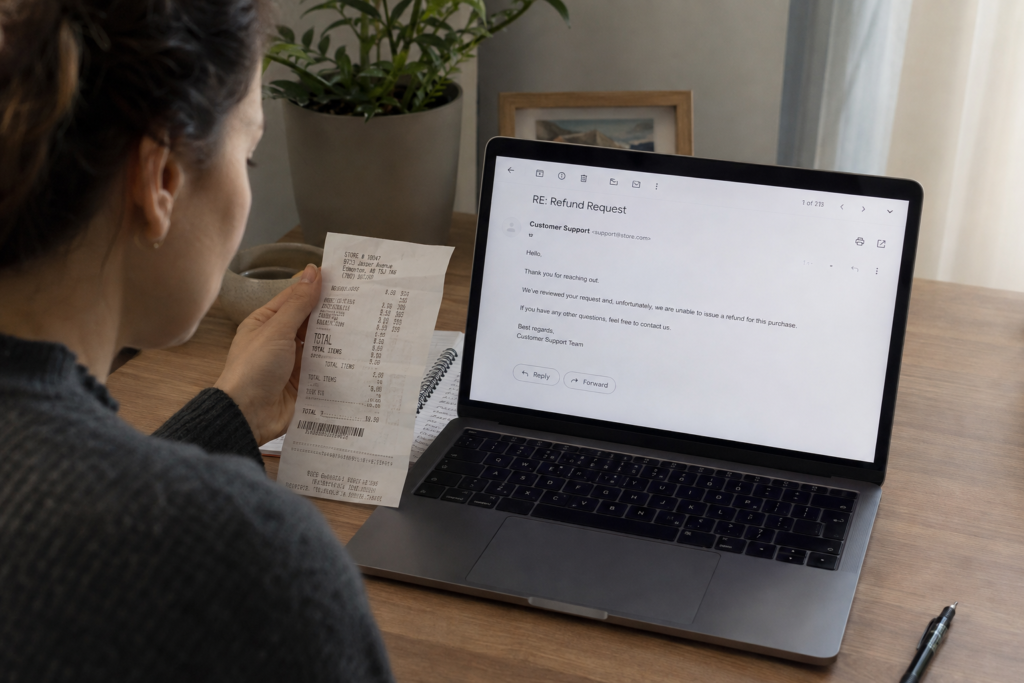
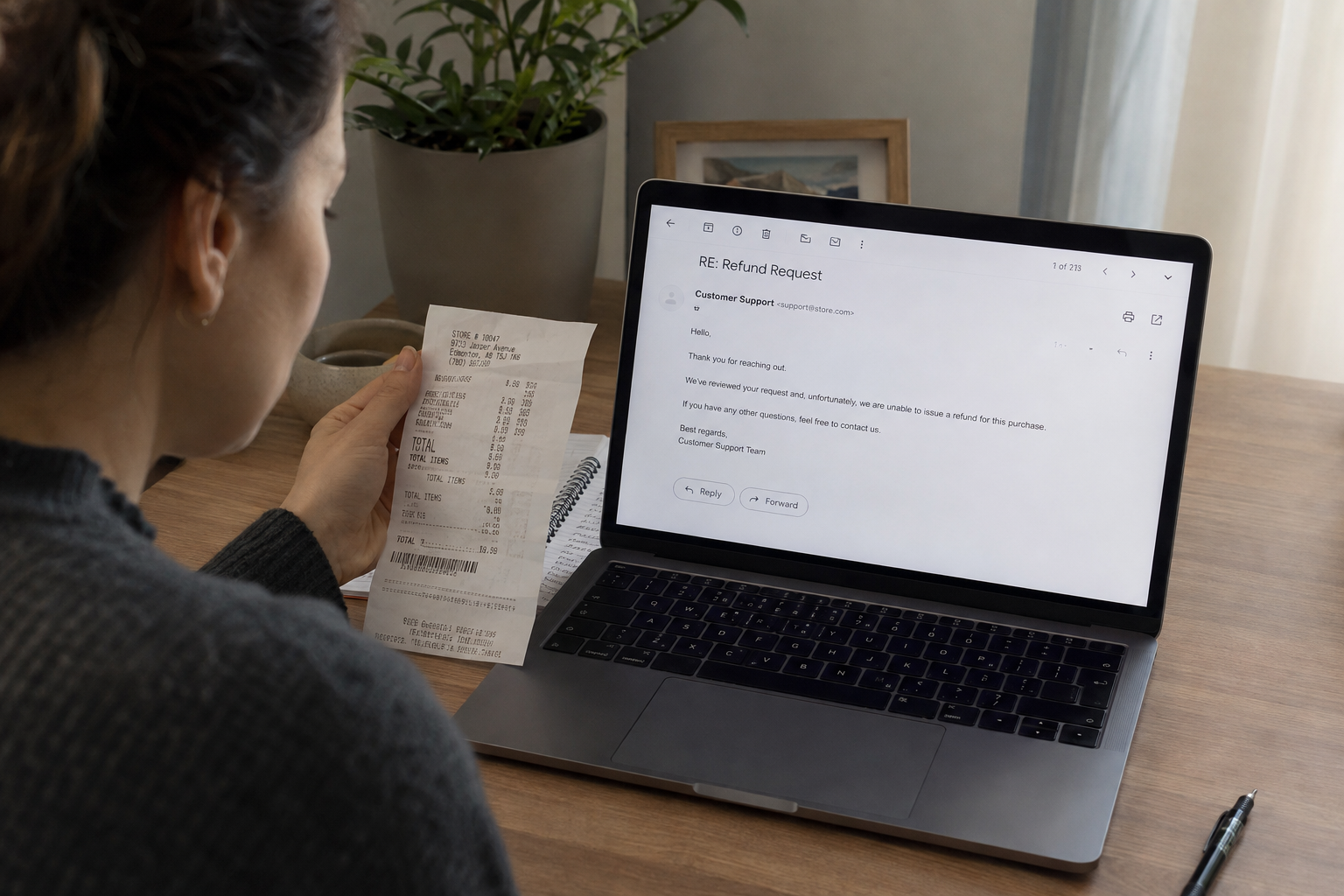
You bought something, it went wrong, and the company’s answer was some version of “there’s nothing we can do.” You know the money is genuinely yours to get back. What you don’t know is how to write the kind of letter that actually moves a company off that answer, or where to go when it doesn’t. This is where it helps to get a refund from a company with AI: not to invent a right you don’t have, but to turn a vague, frustrated complaint into a specific, documented one — the kind companies actually respond to. By the end of this, you’ll have the exact prompt, the escalation order, and the real places to file when direct requests stall out.




Half the shelf, shown. The craft needs all ten.
The Complete No-Hype Guide to Claude · 693 pages · 450+ tested prompts
See the full shelf — $47You can get a refund from a company with AI by using it to draft a specific written complaint that states what happened, what you already tried, and exactly what you want, then using a second AI-drafted step to escalate through the right channel if the first request is denied. AI can’t submit anything or call the company for you, and it can’t guarantee a refund — some situations genuinely aren’t covered by any policy or law. Used well, a documented, specific request is what actually gets companies to reconsider a flat “no.”
Key Takeaways
- Go back to the company in writing before anything else — a documented complaint moves further than a phone call that leaves no record.
- AI is best used to draft a specific, complete complaint letter and the follow-up escalation — not to guarantee an outcome or file anything for you.
- Asking for a manager or supervisor by title, not just repeating your case to the same rep, is often what actually changes the answer.
- The FTC doesn’t resolve individual complaints, and it’s the wrong agency for banks, phone or cable bills, and airlines — those go to the CFPB, FCC, or DOT instead.
- Posting an honest negative review is legally protected under the Consumer Review Fairness Act, and companies can’t threaten you for it.
- Small claims court handles many of these disputes without a lawyer, with limits that run from about $2,500 to $25,000 depending on your state.
Why “No” From Customer Service Isn’t the Final Answer
Most people treat the first “no” from customer service like a verdict. It’s closer to an opening position. Frontline reps are often working from a script with limited authority to approve anything outside standard policy, which means the person you’re talking to may genuinely not be able to say yes — not because your request is unreasonable, but because they don’t have the authority to grant it.
This article is one chapter. The craft is ten books.
693 pages · 450+ tested prompts · instant download · $47
The FTC’s own consumer guidance lays out a specific order that works better than escalating by volume: go back to the business first, in writing if a conversation didn’t resolve it, and be explicit about what you want — a full refund, a replacement, store credit, or a partial discount. Reputable companies would rather know about a problem than lose a customer over it quietly, and a specific ask is easier for a rep to act on than a vague complaint.
Where this tends to go wrong is in how people frame the ask. “This is unacceptable” is an emotion, not a request a company can process. “I’m requesting a full refund of $84.50 for an order that arrived damaged on July 12” is something a rep can actually act on, escalate, or deny with a documented reason. It’s the same instinct behind using AI to find money you’re already leaving on the table — specificity is what turns a complaint into something a company has to actually respond to.

Where AI genuinely helps is turning your version of events into that kind of specific, complete request fast, without you needing to already know the right phrasing or structure. It can’t tell you whether your situation is covered by a return policy or a law, and it can’t call the company for you — but it can stop you from sending the vague, angry version that’s easy to ignore.

The 5-Minute Prep That Makes an AI Complaint Letter Actually Work
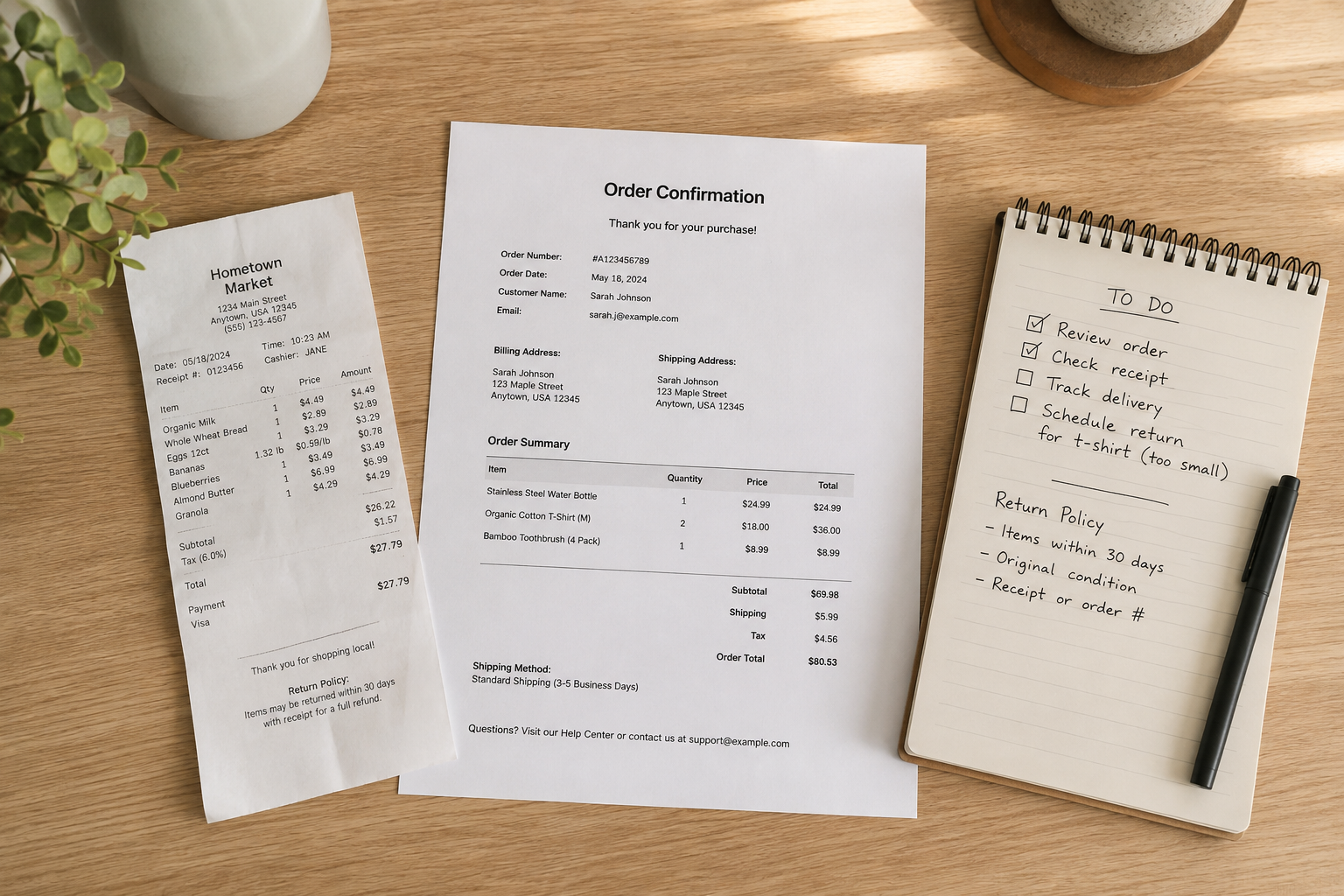
Skip this and you’ll get a generic complaint letter back, because generic is what you gave the AI to work with. Before you open a chat, gather a few things.
The receipt or order confirmation
Gather receipts, warranties, canceled checks, statements, invoices, and contracts before you contact anyone, and make copies to send while keeping your originals.
The company’s actual policy
Check the return policy, stated deadlines, and any warranty terms on your receipt, the packaging, or the company’s website. Many return windows run 30 to 90 days.
A plain timeline of what you already tried
Note every date you contacted the company, who you spoke with, and what they said. This becomes the backbone of your written complaint.
A specific outcome you want
Full refund, partial refund, replacement, or store credit — decide before you write, since a specific ask is what a company can actually act on.
If you’re calling before you write, keep a record of who you spoke with and when — the FTC’s own advice treats this as essential, not optional, since it’s what your written follow-up will reference.
You don’t need a paid AI subscription for any of this. A free-tier account handles a complaint letter fine, since it’s short-form writing. If you’re not sure which free tool to start with, our rundown of free AI writing tools covers the practical differences between them.
The Exact AI Prompt to Get a Refund From a Company With AI
This is the prompt to copy, fill in your own details, and paste into Claude, ChatGPT, or whichever AI tool you already have open:
Copy-Paste Prompt
“I need to write a formal complaint letter to [company name] requesting a refund. Here’s what happened: [describe the problem — what you bought, when, and what went wrong]. I’ve already tried: [list dates and what happened each time you contacted them, or write ‘this is my first contact’]. I want [a full refund of $X / a replacement / store credit], and I’d like a response within [10–14 days is reasonable]. Write a clear, professional letter that states the facts plainly, includes my account or order number, states exactly what I want, and mentions that I’ll escalate to [my state attorney general’s office / the appropriate regulator] if I don’t hear back by the date I specify. Keep it under 200 words.”
Claude in particular tends to keep a letter like this plain and specific rather than padding it with generic reassurance — we’ve written about why its tone reads calmer for formal writing, which matters for a document meant to be taken seriously rather than read as a form complaint. Whichever tool you use, the letter needs to do four things: state the facts, reference your documentation, name a specific outcome, and set a real deadline.
Send it in writing even if you already called — the FTC’s own sample complaint letter follows this exact structure for a reason: name, address, account or order number, a clear description of the problem, what you want, copies of supporting documents, and a stated deadline before you escalate further. Keep a copy of what you send, and if you submit through an online form, screenshot it before you hit submit.
The Complete Series
The whole Claude craft, one library.
$47 $190 · 10 books · 693 pages

Free Download
The No-Hype AI Starter Kit
10 copy-paste prompts that actually save you time, a cheat-sheet for which AI tool to use for which job, and 3 rules that make any prompt you write twice as good — free, instant download.
Get the free Starter Kit →
The Follow-Up That Actually Escalates: What to Say When They Say No Twice
A second “no” is where most people either give up or start repeating the same complaint louder. Neither works as well as changing who you’re talking to.
Ask AI: “The company responded to my complaint with this: [paste their response]. Write me a short, calm follow-up that asks to speak with a supervisor or manager, references my original complaint date, and restates my requested outcome without repeating my whole story from scratch.”
The FTC’s own guidance backs this up directly: if a rep doesn’t offer the result you want, ask for a manager. Be calm, polite, and persistent, and explain the situation fresh to each new person rather than assuming they’ve read your file. Keep your running notes updated every time — who you spoke to, the date, and exactly what they said they’d do.
If the second escalation still goes nowhere, that’s your signal to stop working the company’s phone tree and start using outside pressure instead — which is a different set of tools than another polite email.
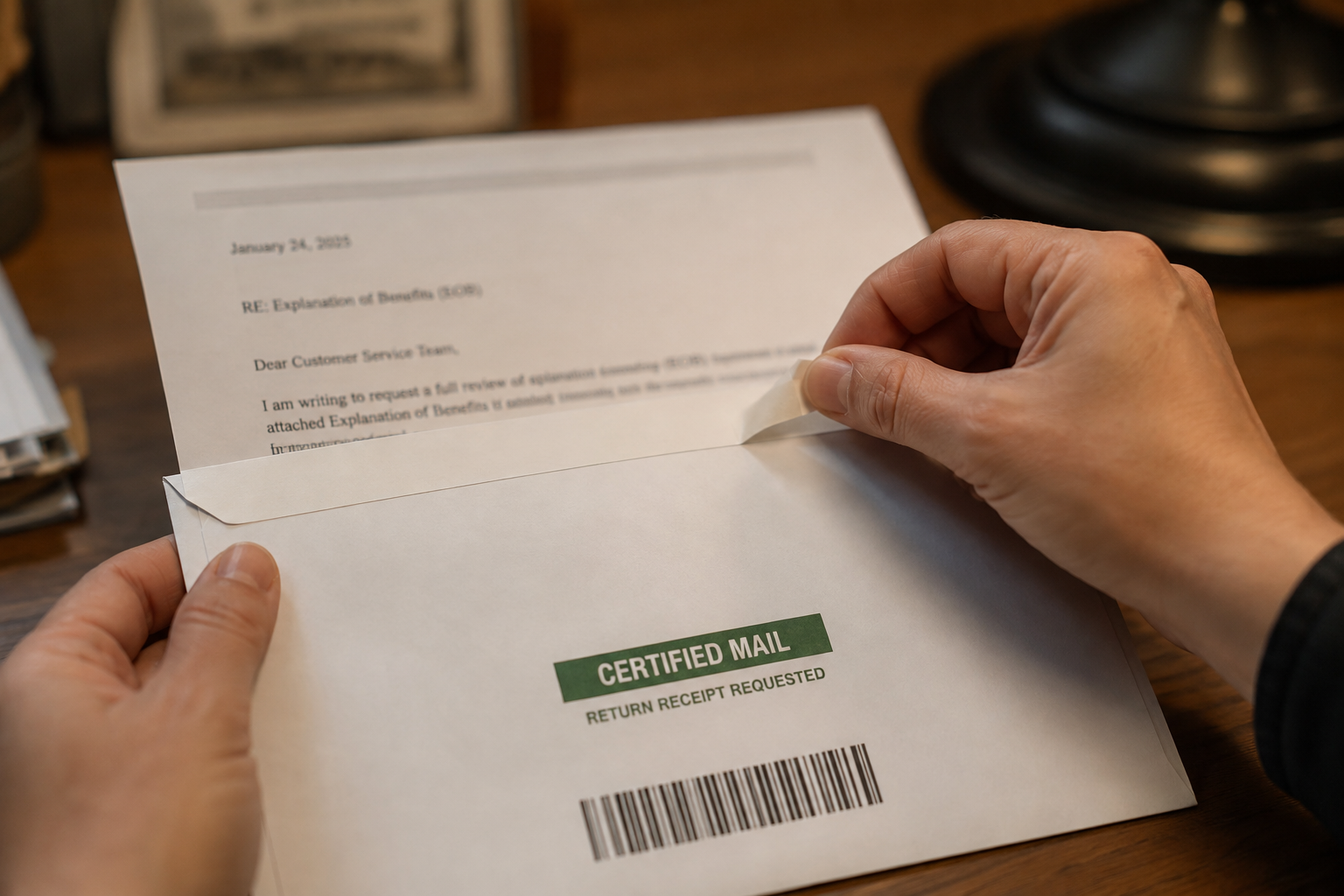
Where to Report It When the Company Won’t Budge (FTC, CFPB, and the Agency Nobody Uses)
This is where most guides get vague, and it’s the part that actually matters: which agency you contact depends entirely on what kind of company you’re dealing with, and picking the wrong one just wastes time.
| Type of company | Where to file | What it actually does |
|---|---|---|
| Most retailers, general businesses | FTC — ReportFraud.ftc.gov | Doesn’t resolve your individual case, but builds a pattern-detection database used for enforcement |
| Banks, credit unions, lenders, debt collectors | CFPB — consumerfinance.gov/complaint | Forwards your complaint directly to the company and requires a response |
| Phone, internet, or cable providers | FCC — consumercomplaints.fcc.gov | Handles billing disputes and service complaints tied to your carrier |
| Airlines — service, baggage, accessibility | DOT Aviation Consumer Protection Division | Handles airline-specific complaints; disability-related ones have a 6-month filing deadline |
The distinction that trips people up most: the FTC does not handle complaints about banks, mortgage servicers, or airlines directly — filing with the wrong agency just delays getting an actual response. The CFPB, by contrast, forwards your complaint to the company and requires them to respond, which is a meaningfully different (and often faster) process than the FTC’s pattern-tracking role.
Whichever agency fits, filing is usually free and takes 10 to 20 minutes, and you can typically do it anonymously if you’d rather not include your contact information — though including it means the agency can follow up if money ever gets recovered in a broader enforcement action. None of these reports guarantee your specific refund. What they do is create a formal record, and in the CFPB’s case specifically, force a company response you might not otherwise get.
Ten books. The whole craft. Zero hype.
From first chat to shipped product — 693 pages, 450+ tested prompts, $47 complete.
Open the libraryreports in the FTC’s Consumer Sentinel Network database as of 2024
typical time to file a complaint with the FTC or CFPB online
Here’s the part that surprises people once they understand it: an individual FTC report feeds into that Consumer Sentinel Network. Law enforcement agencies across the country search that database to spot patterns — the same company generating hundreds of nearly identical complaints looks very different to an investigator than one angry customer does. Your single report probably won’t move the needle alone. Combined with everyone else who reported the same company, it becomes the evidence base for an actual enforcement case. That’s a genuinely different purpose than resolving your specific refund, and worth understanding so you’re not waiting on a response that structurally isn’t coming.

“A flat ‘no’ from customer service is a position, not a ruling.”
Small Claims Court, Chargebacks, and Reviews: Your Options After Escalation Fails
If direct escalation and a regulator complaint both stall, you still have real options, each suited to a different kind of situation.
A credit card chargeback is worth considering if you paid by credit card and the company won’t budge — we’ve covered how to dispute a credit card charge with AI in more depth, since it runs on its own legal timeline separate from a direct complaint to the seller.
Small claims court handles a large share of these disputes without needing a lawyer. Filing limits vary by state, typically running from around $2,500 up to $25,000 in some states, and the process is intentionally simple. Often just filing the paperwork and serving the company notice is enough to prompt a settlement before any hearing happens.
An honest online review is protected speech under the Consumer Review Fairness Act. Companies cannot legally threaten or penalize you for posting your genuine experience, in any forum, including social media — and many companies do monitor reviews closely enough to respond when they see an unresolved complaint in public.
Mediation or arbitration are also worth checking, especially if your original purchase contract requires it. In mediation, a neutral third party helps both sides try to reach an agreement, though nothing forces either of you to settle. Arbitration is more formal — closer to an informal hearing where each side presents evidence, and the arbitrator’s decision can be legally binding. Some companies require arbitration for any dispute and have you waive your right to sue as a condition of the purchase, which is worth knowing before you assume small claims court is automatically available to you. Check your receipt, terms of service, or purchase contract for an arbitration clause before you file anything.
Ask AI to help you figure out which of these actually fits: “Here’s my situation: [describe the dispute, the amount, and whether you signed any contract or terms of service]. Based on this, would small claims court, a credit card chargeback, or an online review be the most realistic next step, and why?” It won’t replace reading your own contract, but it’s a fast way to sort your options before you commit time to any one of them.

Common Mistakes People Make Trying to Get a Refund With AI
Sending a vague complaint instead of a specific one
“I’m unhappy with this purchase” gives a company nothing to act on. Your AI-drafted letter should always name the exact dollar amount, date, and outcome you want.
Skipping the paper trail
A phone call with no notes is easy for a company to dispute later. Write down who you spoke with, when, and what they promised every single time.
Filing with the wrong agency
Reporting a bank dispute to the FTC, or an airline issue to the CFPB, sends your complaint nowhere useful. Match the company type to the right regulator before you file anything.
Assuming a regulator complaint guarantees a refund
The FTC in particular does not resolve individual disputes — it builds enforcement patterns. If you need your specific money back, a regulator complaint supports that goal, but small claims court or a chargeback is what actually recovers it.
Threatening legal action you don’t intend to take
A letter that vaguely threatens “legal action” with no real follow-through plan reads as an empty threat to anyone who’s seen one before. If you name small claims court or a specific regulator as your next step, be prepared to actually follow through.
FAQ
What can you do if a company refuses to give you a refund?
Start with a written complaint that states exactly what happened and what you want, referencing any documentation you have. If that doesn’t work, escalate to a supervisor, then to the appropriate regulator for your situation — the FTC, CFPB, FCC, or DOT depending on the company. Small claims court and a credit card chargeback remain options if all else fails, and posting an honest review is legally protected the entire time.
Does filing an FTC complaint get you your money back?
Not directly. The FTC doesn’t investigate or resolve individual complaints — it collects reports to detect patterns and build enforcement cases against companies. Your complaint can eventually feed into a broader case that includes refunds, but for your specific situation, a chargeback or small claims filing is more likely to recover your money.
Is a chargeback the same as a refund dispute?
Not quite. A refund request goes directly to the seller. A chargeback is a formal process through your credit card issuer that reverses the transaction and pulls funds back from the merchant’s bank, and it runs on its own legal timeline separate from whatever the seller says directly to you.
How much can you sue for in small claims court?
It depends entirely on your state. Limits commonly range from about $2,500 to $25,000, and the process is designed so you don’t need a lawyer. Check your local small claims court’s specific limit and filing process before assuming your dispute qualifies.
Can a company punish you for leaving a bad review?
No. The Consumer Review Fairness Act protects your right to post an honest review of a company’s products or service, in any forum, and it’s illegal for a company to threaten or penalize you for doing so as long as the review reflects your genuine experience.
Should you threaten legal action in a complaint letter?
Only if you actually mean it. Naming a specific next step — small claims court, a regulator complaint, a chargeback — is more effective than a vague threat, and it signals you’ve thought through your options rather than just venting frustration.
A flat “no” from customer service is a position, not a ruling, and learning to get a refund from a company with AI is mostly about turning frustration into something specific enough for a company to actually act on. Pull your documentation, name your exact outcome, and escalate through the right channel when direct requests stall. Companies rarely reverse course out of sympathy — they do it when a complaint is specific, documented, and clearly headed somewhere if ignored.
It’s the same habit worth building anywhere else money quietly slips away: letting AI quietly handle the parts of running your life, or your business, that used to eat a whole afternoon. For more of this kind of practical, no-hype AI-for-life guidance, browse our Everyday Life section.
AI Without the Hype · The Complete Series
The Complete No-Hype Guide to Claude
10 books · 693 pages · 450+ copy-paste prompts for writing, business, research, and everyday tasks like the ones in this article — every prompt verified, every verdict earned, zero filler.
$190 $47 · Save 75%
Get all 10 books →This article is educational information, not legal advice, and isn’t affiliated with the FTC, CFPB, FCC, DOT, or any company named here. Complaint processes, filing limits, and contract terms vary — confirm your specific situation with the relevant agency or a licensed consumer attorney. LookToAI is an independent, unofficial guide and is not affiliated with Anthropic, OpenAI, or Google.

Enjoyed this? Steal the 10 prompts I actually use.
The No-Hype AI Starter Kit — copy-paste prompts, a model cheat-sheet, and a 7-day plan. Drop your email and it's yours instantly.
No spam. Unsubscribe anytime.