


Somewhere along the way, “artificial intelligence” stopped meaning anything specific. It gets slapped on a chatbot, a spreadsheet formula, a toaster with a sensor, and a genuine breakthrough in medical imaging — all in the same week. That vagueness is the actual problem: you can’t reason about something you can’t define, and you definitely can’t tell a useful tool apart from a marketing label if the word covers both. The honest answer to what is artificial intelligence starts with clearing that fog, and then walking through how these systems actually get built, where they genuinely help, and where they still fall apart.
The Complete Series
The whole Claude craft, one library.
$47 $190 · 10 books · 693 pages

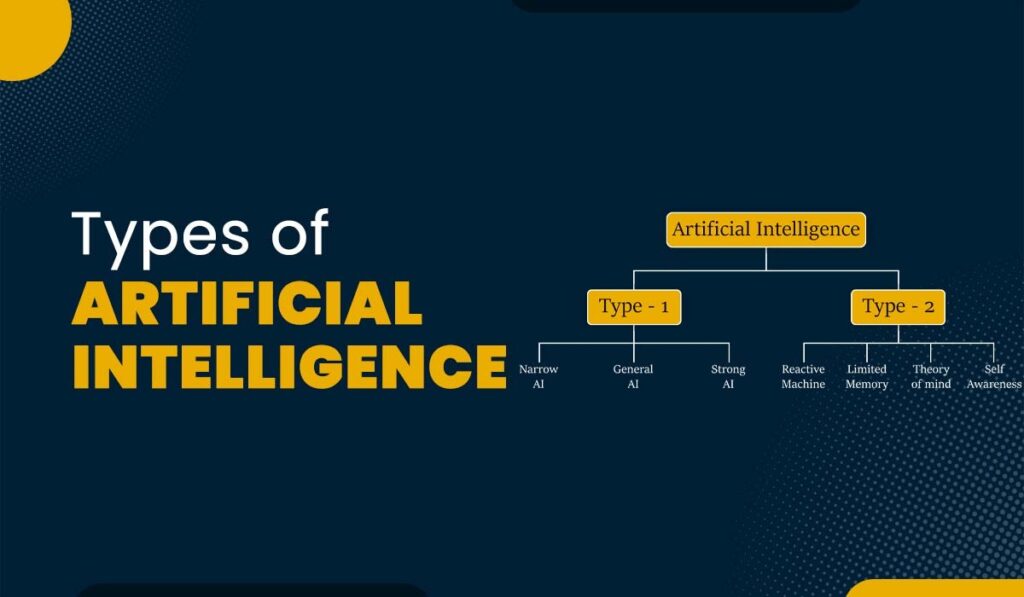
Artificial intelligence is software that performs tasks normally requiring human judgment — recognizing an image, following a sentence, spotting a pattern in a spreadsheet, predicting what comes next — by finding statistical patterns in large amounts of data rather than executing a fixed list of rules a person wrote by hand. Almost everything you’d call “AI” today is narrow: built to do one job well, like filtering spam or ranking a search result, not to reason across every subject the way a person can.
Key Takeaways
- Artificial intelligence describes systems that learn patterns from data instead of following a script a programmer typed line by line.
- Nearly every AI product in daily use is “narrow AI” — built for one specific job, not general reasoning across every domain.
- Machine learning, deep learning, and natural language processing are subfields inside AI, not different words for the same thing.
- An AI system is only as reliable as the data it was trained on, which is exactly why biased inputs produce biased outputs.
- The field has existed since the 1950s; what changed recently is the volume of data and computing power available, not the core idea.
- Learning AI well means understanding the underlying concepts before touching a specific tool, since tools change constantly and concepts don’t.
What Is Artificial Intelligence, Really?
Strip away the sci-fi imagery and artificial intelligence is a design goal, not a single piece of technology: build a system that can do something a person’s intelligence is normally required for. That’s it. There’s no single algorithm called “AI” — there’s a large collection of techniques, and which one gets used depends entirely on the job. A system that tags spam email uses a different approach than one that generates an image from a text prompt, even though both get called “AI” in casual conversation.
Ten books. The whole craft. Zero hype.
From first chat to shipped product — 693 pages, 450+ tested prompts, $47 complete.
Open the library
Narrow AI vs. General AI
This is the distinction that clears up most of the confusion. Narrow AI (sometimes called “weak AI”) is built for one job and can’t step outside it — a recommendation engine that’s excellent at suggesting your next show has no idea how to hold a conversation. General AI (sometimes called “strong AI”) would match human-level reasoning across any subject. It’s a research goal, not a product you can buy, and nothing currently deployed qualifies.
| Type | What It Can Do | Real Example |
|---|---|---|
| Narrow AI | One task, done well, within fixed boundaries | Spam filter, voice assistant, spell-checker |
| General AI | Human-level reasoning across any domain | Does not exist as a deployed product yet |

A Short History of AI: From Dartmouth to Daily Use
None of this is new. Philosophers argued about the nature of mind and reasoning long before a single computer existed, and the formal field got its name in 1956 at the Dartmouth Conference, where a small group of researchers — including John McCarthy, who coined the term — decided artificial intelligence was worth studying as its own discipline. What’s changed since then isn’t the core idea. It’s the amount of data available to learn from and the computing power available to process it.

- 1950 — Alan Turing proposes the “Turing Test” as a way to evaluate whether a machine’s behavior is indistinguishable from a person’s.
- 1956 — The Dartmouth Conference gives the field its name and its first research agenda.
- 1980s — Expert systems use hand-coded, rule-based logic to mimic human decision-making in narrow domains like medical diagnosis.
- 1997 — IBM’s Deep Blue defeats world chess champion Garry Kasparov, showing brute-force search could beat elite human strategy in a bounded game.
- 2011 — IBM Watson wins on Jeopardy!, demonstrating that a system could parse natural language questions well enough to compete against champions.
- 2016 — Google’s AlphaGo beats Go champion Lee Sedol, a milestone many researchers expected was still a decade away.
- 2020s onward — Large language models and generative tools put AI directly into consumer hands, moving it from research labs into everyday apps.
How AI Systems Actually Learn and Work
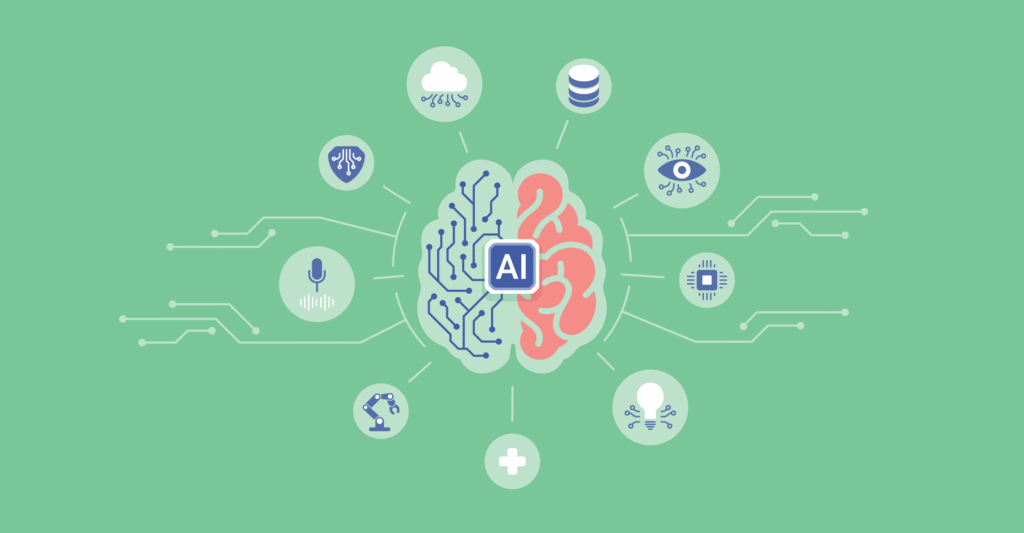
An AI system doesn’t get programmed with the answer. It gets shown a large number of examples and left to find the pattern that connects them. That’s the entire shift from traditional software: instead of writing “if this, then that,” you feed the system data and let it work out its own internal rules for getting from input to output.
The Steps, In Order
- Data collection. The system needs a large, relevant set of examples — emails, images, transactions, whatever matches the task.
- Preprocessing. Raw data is cleaned, labeled, and formatted so the model can actually use it — this step is unglamorous and takes up most real project time.
- Choosing an approach. Different tasks call for different techniques — classification, regression, clustering — and the choice shapes everything downstream.
- Training. The model adjusts its internal parameters repeatedly until its predictions match the training examples closely enough.
- Evaluation. The model is tested against data it hasn’t seen before, to check whether it actually generalized or just memorized.
- Deployment. The trained model goes live inside a real product, where it starts making predictions on real, new inputs.
- Iteration. Performance is monitored, mistakes get fed back in, and the model is retrained — this cycle never really stops.
A Concrete Example: Spam Filtering
An email spam filter isn’t handed a rulebook of banned words. It’s shown millions of emails already labeled “spam” or “not spam,” and it learns which combinations of sender behavior, link patterns, and phrasing tend to show up in each group. That’s why a filter improves over time and why spammers constantly change tactics — they’re not evading a static rule, they’re evading a model that keeps re-learning.
The Core Technologies Behind Modern AI
“AI” is the umbrella term. Underneath it sit several distinct subfields, each solving a different kind of problem, and mixing them up is where a lot of beginner confusion comes from.
| Subfield | What It Does | Real Example |
|---|---|---|
| Machine Learning (ML) | Algorithms that improve from data without hand-coded rules | Credit card fraud detection |
| Deep Learning | ML using layered neural networks to model complex patterns | Photo tagging on social apps |
| Natural Language Processing (NLP) | Lets software parse and generate human language | Chatbots, translation tools |
| Computer Vision | Lets software interpret images and video | Medical scan analysis |
| Robotics | Pairs AI decision-making with physical machines | Warehouse picking robots |
Notice that “machine learning” appears as one row, not the whole table. Every deep learning system is machine learning, but not every machine learning system uses deep learning — some of the most reliable fraud-detection models in production today use much simpler statistical techniques, because simpler is easier to audit and explain.
Where AI Already Shows Up in Your Day
You don’t need to seek AI out. It’s already routed through most of the digital tools you touch before lunch.

- Voice assistants. Siri, Alexa, and Google Assistant lean on NLP to turn spoken audio into an action.
- Streaming platforms. Netflix and YouTube rank what you see next based on patterns in what you and similar viewers already watched.
- E-commerce. Product recommendations on sites like Amazon are ranked by models trained on browsing and purchase history.
- Healthcare. AI-assisted image analysis helps flag anomalies in scans for a radiologist to review — it supports the decision, it doesn’t replace the doctor.
- Finance. Fraud detection, credit scoring, and algorithmic trading all run on models built to spot patterns faster than a person could.
- Transportation. Route optimization and driver-assist features make real-time decisions from live sensor and traffic data.
The Real Trade-Offs: What AI Does Well and Where It Fails
Strengths
- Speed and consistency. A trained model processes thousands of cases with the same criteria applied every time, with no fatigue.
- Availability. These systems run continuously — no shifts, no downtime beyond maintenance.
- Scale. A model that works on a thousand records works, with the right infrastructure, on a billion.
- Pattern detection. AI can surface correlations across huge datasets that would take a human analyst months to find manually.
Limitations
- Data dependency. A model trained on flawed or incomplete data will confidently reproduce those flaws.
- No real generalization. A model built for one task usually can’t be repurposed for a different one without retraining.
- Limited transparency. Many models, especially deep learning ones, are hard to fully explain — even to the people who built them.
- Displacement risk. Automation genuinely changes which tasks are worth paying a person to do, particularly repetitive ones.
The Ethical Questions AI Forces Us to Answer
The more decisions get handed to a model, the more the questions around it stop being theoretical.
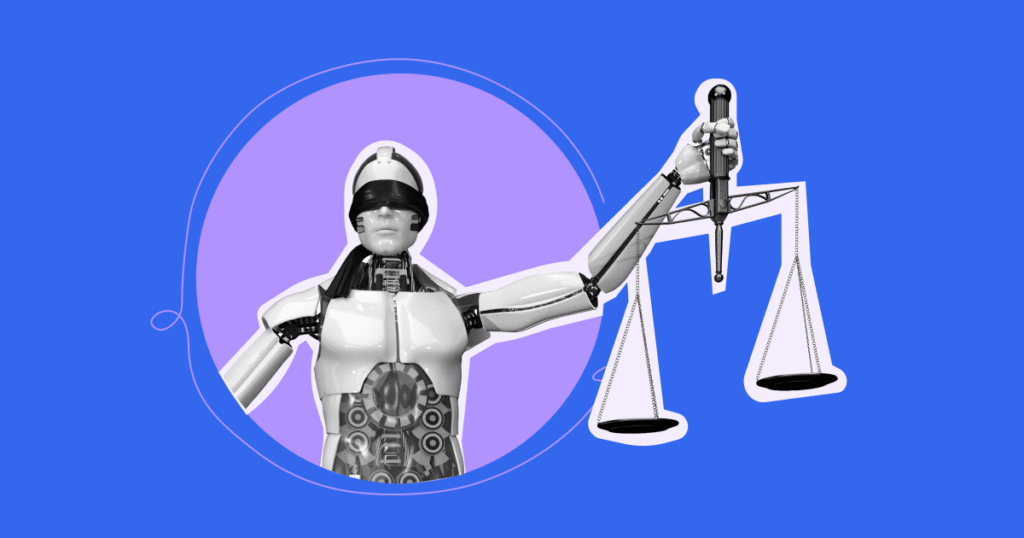
- Bias. A model trained on historically biased data will inherit and often amplify that bias, unless it’s specifically corrected for.
- Privacy. Systems built on personal data can expose or infer more about a person than they ever explicitly shared.
- Accountability. When an AI-driven decision causes harm, responsibility has to sit somewhere — the developer, the deployer, or the organization using it.
- Autonomy. How much decision-making authority should a system have in high-stakes areas like hiring, lending, or law enforcement?
Responsible use of AI depends on transparency about what a system does, ongoing review of its outputs, and clear ownership when something goes wrong — none of which happens automatically just because the technology works.


From the No-Hype series
Two of the ten books readers start with.
Writing that sounds like you · a workspace that remembers your business. The full library: 693 pages, $47.
See the path →How to Actually Start Learning AI (Without Wasting a Year)
- Learn the concepts before the code. Understand what training, overfitting, and evaluation actually mean before you touch a library.
- Cover the basic math. You don’t need a PhD, but basic statistics and linear algebra make everything else click faster.
- Learn Python. It’s the default language for almost every AI and machine learning tool in wide use.
- Build something small. A basic classifier using a tool like Scikit-learn or TensorFlow teaches more in a weekend than a month of reading.
- Follow primary sources. Publications like MIT Technology Review and research archives like arXiv keep you grounded in what’s actually been shown to work, not what’s being marketed.
Free Tools Worth Trying
- Google Teachable Machine — build a working AI model in the browser with no coding required.
- Kaggle — real datasets, real competitions, and a large community sharing working code.
- Scikit-learn — the most approachable Python library for classic machine learning models.
- AI Stack Exchange and r/MachineLearning — active communities where beginner questions get real answers.
Common Mistakes People Make Learning AI
- Treating “AI” as one single technology. Conflating a chatbot with self-driving software leads to wrong expectations about what either one can actually do — they solve completely different problems with different techniques.
- Assuming the system “understands” language the way a person does. It’s matching statistical patterns, not comprehending meaning — which is exactly why it can produce a confident, fluent, and completely wrong answer.
- Skipping the fundamentals to jump straight into a tool. Installing a deep learning framework before understanding what a training set or a validation split is just means getting stuck later with no idea why.
- Believing a model is neutral because it’s “just math.” Training data reflects the biases of whoever and whatever generated it — math doesn’t remove that, it can just encode it more efficiently.
- Chasing whichever tool launched most recently. Specific tools go out of date within a year or two. The underlying concepts — data quality, evaluation, statistics — don’t, and they’re what actually transfers to the next tool.
Frequently Asked Questions
Is artificial intelligence the same thing as machine learning?
No. Artificial intelligence is the broader goal — building systems that perform tasks requiring human-like judgment. Machine learning is one method for reaching that goal, where systems learn patterns from data instead of following hand-written rules. Every machine learning system is a form of AI, but AI also includes rule-based approaches that aren’t machine learning at all.
Can AI actually think like a human?
Not currently, and not in the way the question implies. Today’s AI systems recognize statistical patterns in data — they don’t have beliefs, intentions, or genuine understanding. A system can produce output that sounds thoughtful without any of the reasoning a person would use to reach the same conclusion. General AI, which would reason like a human across any topic, doesn’t exist yet.
What programming language should I learn to work with AI?
Python, without much competition. It has the largest ecosystem of AI and machine learning libraries, the most tutorials, and the biggest community for troubleshooting. R is common in statistics-heavy research roles, and some production systems use Java or C++ for performance reasons, but Python is the right starting point for almost anyone new to the field.
Is artificial intelligence dangerous?
The realistic risks aren’t rogue robots — they’re biased hiring models, privacy-invasive data collection, and automation replacing repetitive jobs faster than new roles appear. Those are governance and oversight problems, not inevitable outcomes of the technology itself. Well-monitored systems, tested against real-world data and reviewed regularly, meaningfully reduce these risks.
Do I need to be good at math to learn AI?
You need to be comfortable with it, not exceptional at it. Basic statistics and linear algebra cover most of what you’ll need to understand how models actually work. Plenty of practitioners build useful models with library defaults and a working grasp of the concepts, and go deeper into the math only once they hit a problem that requires it.
What’s the difference between AI and regular automation?
Regular automation follows a fixed set of rules a person wrote — if this input, then that output, every time. AI learns its own rules from data and can handle inputs it was never explicitly programmed to expect. A basic email auto-responder is automation. A spam filter that keeps adapting to new tactics is AI.
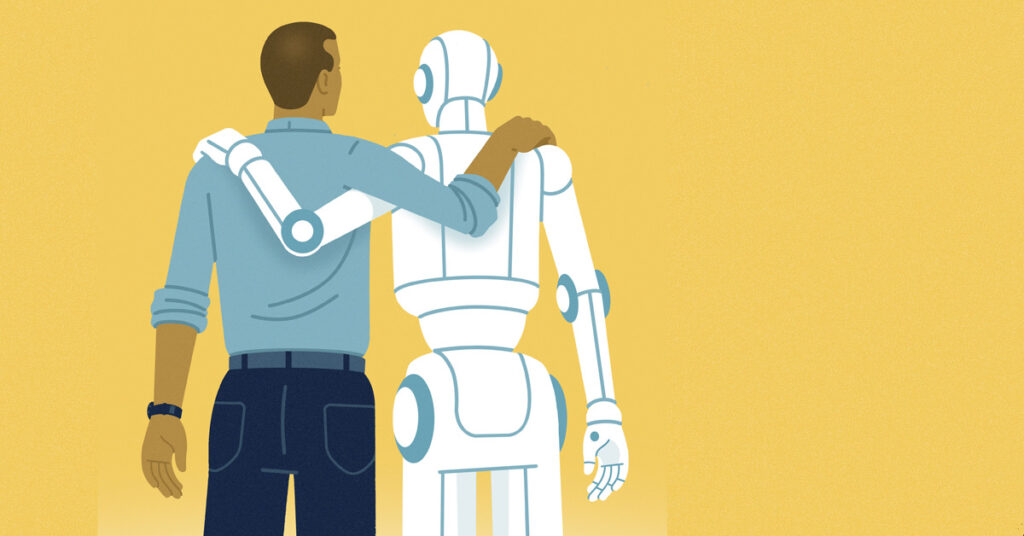
What is artificial intelligence, in the end, comes down to this: it’s software that learns patterns from data to do a specific job well, not a mind, not a threat by default, and not magic. The systems worth paying attention to are the ones solving a real, bounded problem with data you can trust. Start there, understand the mechanics before the marketing, and the rest of the field gets a lot easier to evaluate honestly.

Bookmark this instead of 50 threads: the complete 10-book Claude curriculum — 693 pages, 450+ tested prompts, $47. Do the math →
Enjoyed this? Steal the 10 prompts I actually use.
The No-Hype AI Starter Kit — copy-paste prompts, a model cheat-sheet, and a 7-day plan. Drop your email and it's yours instantly.
No spam. Unsubscribe anytime.