




You’ve seen the ads: “Make $5,000 writing resumes with ChatGPT!” They’re wrong about how easy it is, but not about the opportunity underneath it. There’s a real, specific service you can build around an AI resume writing side hustle — one that can pay $100 to $600 or more per client and doesn’t require a certification, ten years of HR experience, or a following. This guide skips the hype and gives you the actual workflow, pricing, and client math.
"Every prompt was run before it was printed. If a claim couldn't be tested, it didn't make the book." The No-Hype Guide to Claude — all 10 books →
An AI resume writing side hustle means using ChatGPT or Claude to draft resumes and cover letters for paying clients, then editing that draft into a document that reads like a human wrote it and holds up against real hiring screens. You handle intake, structure, and voice; the AI handles the blank-page problem. Most beginners charge $100–$300 per resume and can realistically land a first paying client within two to three weeks of actively looking.
Key Takeaways
- ✓Charge per project, not per hour — most resume writers earn $100 to $600+ per client depending on experience and package.
- ✓Letting AI draft everything and sending it as-is fails; the part clients pay for is the human edit, not the prompt.
- ✓The “75% of resumes get rejected by ATS” statistic is a myth — a 2025 survey of 25 recruiters found 92% don’t auto-reject based on formatting or content.
- ✓You don’t need a certification like CPRW to start, though it can help you justify higher rates once you have a track record.
- ✓Your first clients are far more likely to come from LinkedIn outreach and referrals than from cold-bidding on Upwork or Fiverr.
- ✓Disclose your AI use where a platform requires it — undisclosed AI use is the fastest way to torch a client’s trust.
What an AI Resume Writing Side Hustle Actually Is (And Isn’t)
An AI resume writing side hustle is a freelance service where you use a large language model — ChatGPT, Claude, or similar — to produce a fast first draft of a client’s resume, then rebuild that draft into something that sounds like the client, not like a chatbot. That’s the whole business model. You’re not selling AI. You’re selling judgment, structure, and an outside eye, with AI doing the typing.
The No-Hype Guide to Claude — complete
- 10 books · 693 pages · every book stands alone
- 450+ prompts, each one run before it was printed
- $47 for the full set — under $5 a book
Here’s where most of the get-rich-quick guides get the ratio backwards: they treat the AI output as the finished product and the human part as an afterthought. It’s the opposite in practice. Anyone can paste “write me a resume” into a chatbot. What a client actually pays for is someone who asks the right intake questions, knows what an applicant tracking system — the software companies use to collect, sort, and search resumes before a person opens one, usually shortened to ATS — actually looks for, and edits the AI’s draft until it stops sounding like every other AI-generated resume in the pile.
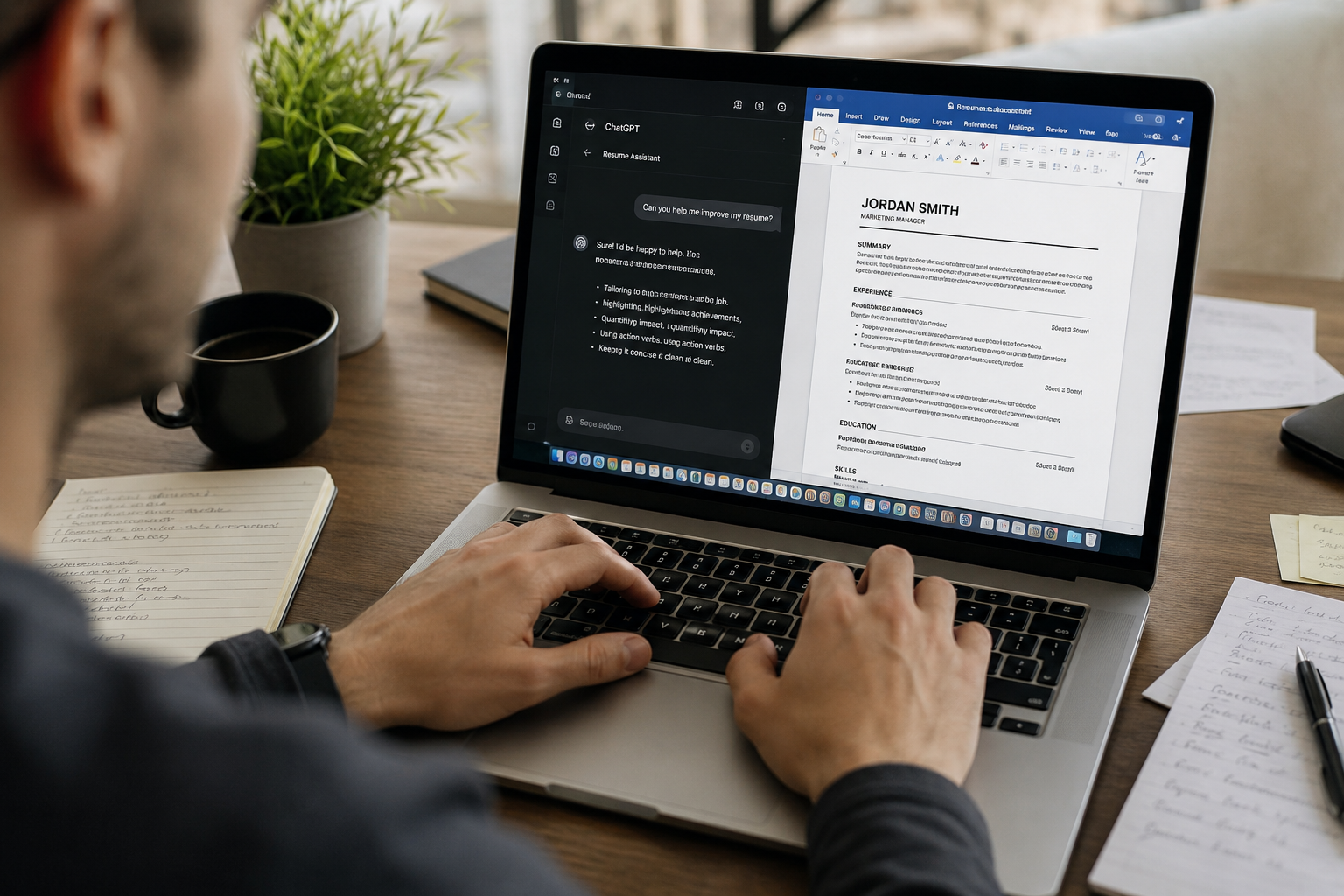
Forbes recently profiled this as one of the more durable AI-powered side hustles heading into 2026, framing it as a resume-and-LinkedIn service where AI handles the first draft and a human handles the polish, tone, and personalization — cover letters, executive bios, and interview prep materials included.
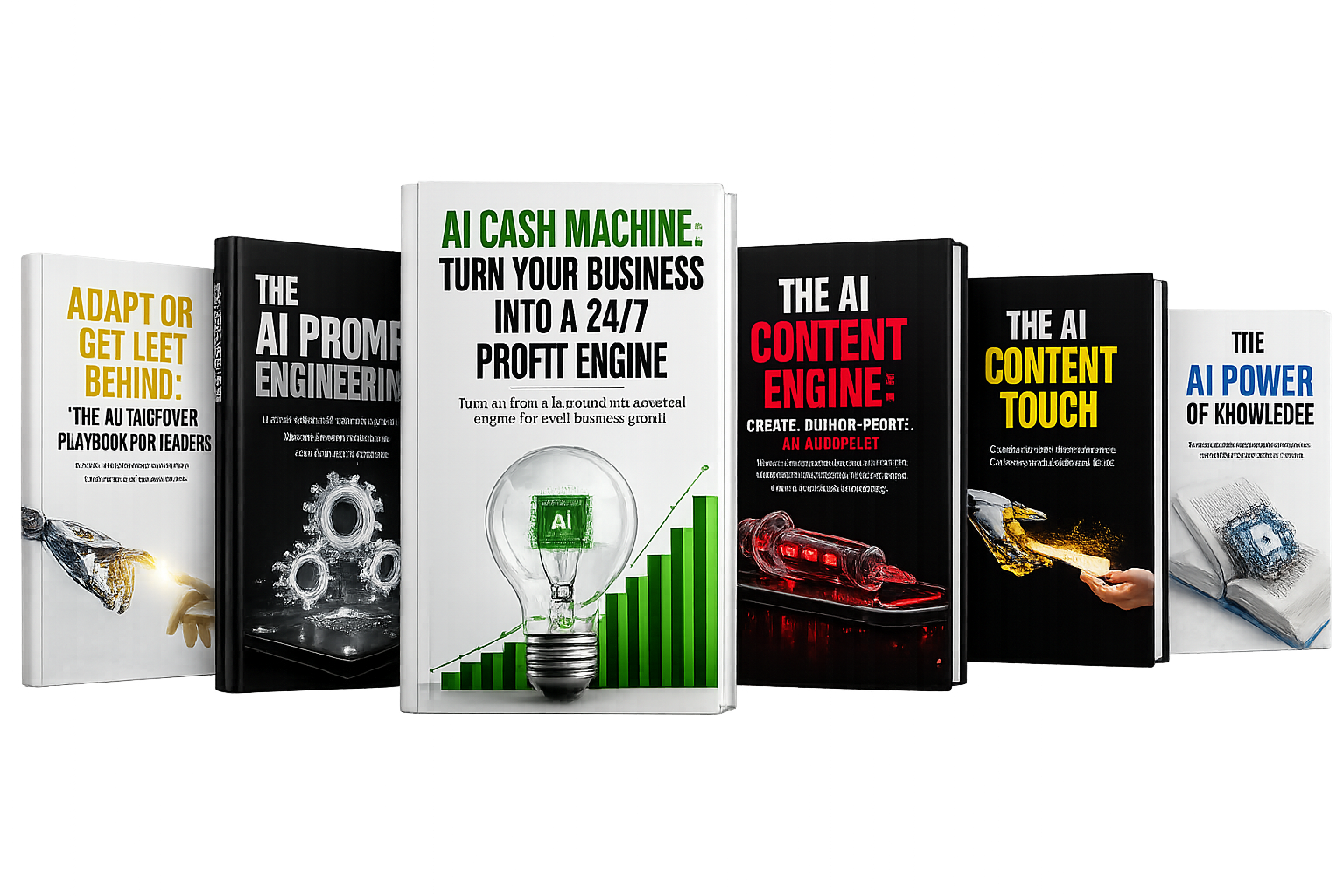
The deliverable itself is usually a package: a rewritten resume, sometimes a matching cover letter, and increasingly a LinkedIn summary rewrite, since recruiters check LinkedIn almost as often as the resume itself. You don’t need design skills for this — a clean, ATS-readable Word or Google Docs file beats a graphic-heavy PDF nine times out of ten, a point worth remembering before we get to the mistakes section.
What this side hustle isn’t: a subscription tool, a template shop, or something you can run entirely on autopilot. If a client could get a better result from a free AI resume builder, they wouldn’t be paying you. The value you add is everything AI can’t do alone — asking follow-up questions, catching a career gap that needs reframing, and knowing which achievements to lead with for a specific industry.
What to Charge for an AI Resume Writing Side Hustle (Undercharging Kills It Fast)
What you charge determines whether this AI resume writing side hustle is worth your time, and it’s where beginners sabotage themselves fastest. Price like a template shop and you’ll work like one — a treadmill of $20 gigs that pays worse than minimum wage once you count the editing time. Price like a service and the math changes completely.
Realistic resume writing rates run $100 to $600 or more per client, depending on your experience, the client’s seniority, and what’s included. An entry-level rewrite for someone with two years of experience sits at the low end. A director-level resume with an executive bio and LinkedIn rewrite sits at the high end. Most beginners start in the middle and raise prices once they’ve built a portfolio of real client wins.
| Package | What’s Included | Typical Price |
|---|---|---|
| Starter | Resume rewrite only | $100–$200 |
| Standard | Resume + cover letter | $200–$350 |
| Executive Bundle | Resume + cover letter + LinkedIn rewrite | $350–$600+ |
Do the math on volume, not just price. Three to four resumes a week at $250–$350 each puts you around $1,000–$1,500 a month working part-time — a realistic side-income range, not a guarantee, since it depends entirely on how consistently you can find clients (more on that shortly). That’s a meaningfully different number than the roughly $24–$30 an hour some generalist freelance platforms advertise for “resume writer” gigs, which usually means editing someone else’s draft rather than running the whole intake-to-delivery process yourself.
⚠️ Warning — Never price by the hour. A fast AI-assisted workflow means you’ll finish in 90 minutes what a client assumes took all day, and hourly pricing punishes your own efficiency. Price the deliverable, not your time.
And don’t discount because you’re new. A $40 resume signals a $40 resume before a client has read a single sentence you’ve written. Price at the low end of the Starter tier above and hold that line — it filters for clients who take the process seriously, which is exactly who you want practicing your portfolio on.
Specialization is the fastest lever for moving up the pricing table once you’ve handled a dozen or so clients. A generalist “I write any resume” position competes on price. A narrow one — tech career-changers, healthcare professionals returning to the workforce, or federal resumes, which follow entirely different formatting rules than private-sector ones — competes on expertise, and expertise is what supports the $350–$600+ end of the range. Pick a lane after your first ten clients, not before; you need the pattern-matching from real projects to know which lane fits you.
From the series: everything in this article — and the nine books around it — lives in The Complete No-Hype Guide to Claude. 10 books, 693 pages, 450+ tested prompts, $47. See the library →
The 5-Step AI Resume Writing Workflow That Produces a Hireable Resume
The workflow is what separates a resume a client can use from an AI dump they’ll quietly delete — it’s also what makes an AI resume writing side hustle profitable instead of just busy. It’s five steps, and skipping any of them shows up in the final product.
Real Intake, Not a Form
A short call or detailed questionnaire covering the target role, achievements with numbers, and what the client thinks is holding them back.
Structure Before You Draft
Sort the raw notes into reverse-chronological roles and rank achievements by relevance to the target job — before AI touches any of it.
Draft With a Specific Prompt
Feed the AI structured notes and explicit rules, not a vague “write my resume.” The prompt below is a starting point.
Edit for Voice and ATS
Rewrite anything that sounds generic, cut filler, and format for single-column, table-free parsing so the file reads cleanly.
Deliver With One Revision
Send the file plus a short note on what changed and why. Build in one round of revisions, not unlimited ones.
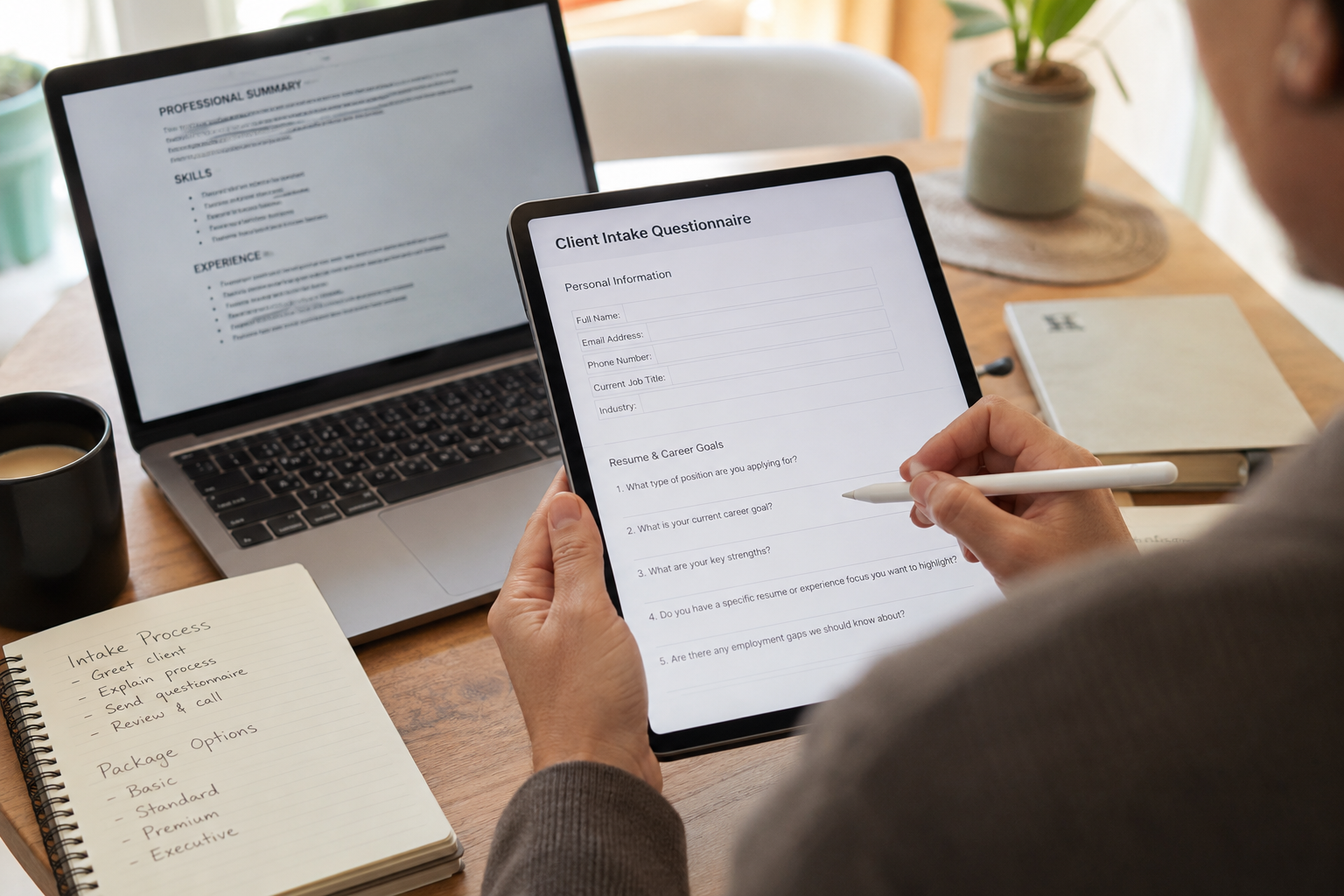
Step three is where most people write a lazy prompt and get a generic result. A tighter prompt gets you a draft that’s actually worth editing instead of rewriting from scratch:
Copy-paste prompt
Act as a professional resume writer. Using the notes below, write the achievement bullets for this role: [job title]. Notes: [paste raw responsibilities, numbers, and outcomes]. Rules: each bullet starts with a strong action verb, includes a measurable result wherever the notes support one, stays under 20 words, and avoids generic phrases like “responsible for” or “team player.”
That prompt works for Claude or ChatGPT equally well. The output still needs your edit pass — but it starts from structured facts instead of a blank prompt, which is the difference between a five-minute cleanup and a twenty-minute rewrite.
Set the revision boundary before you deliver anything, not after a client asks for a fourth round of changes. State it plainly in your intake email: one round of revisions is included, additional rounds are billed separately. Most clients never need more than one round if the intake was thorough — the requests that spiral usually trace back to a rushed step one, not a stingy revision policy.
The “75% Rejection” Myth — And What Actually Gets a Resume Read
You’ll see this claim everywhere: “75% of resumes are rejected by ATS before a human ever sees them.” It’s repeated in career blogs, LinkedIn posts, and plenty of resume-service marketing. It’s also not backed by real data — and knowing that is a genuine selling point for your AI resume writing side hustle, because most competitors are still using it as a scare tactic.
Enhancv’s 2025 survey of 25 U.S. recruiters across industries from tech to healthcare found that 92% of them do not configure their ATS to automatically reject resumes based on formatting or content. Only two of the 25 had auto-rejection rules turned on, and those were tied to hard skill-match thresholds, not font choices or file formats.
92%
of recruiters don’t auto-reject on formatting or content
100%
use knockout questions (work auth, licenses, location)
88%
rank relevant experience as what they value most
What’s actually filtering candidates is volume, not software. Recruiters interviewed for that study described openings that pull in 400 to 2,000+ applications within days. Nobody reads all of that manually — so knockout questions handle hard requirements like work authorization or a required license, and everything else gets triaged by time and relevance, not secretly deleted by a robot.
This article is one chapter. The craft is ten books.
693 pages · 450+ tested prompts · instant download · $47

That reframes what you’re actually selling as a resume writer. It’s not “beating the bots.” It’s clarity: a clean, skimmable structure, relevant experience pulled to the top, natural (not stuffed) keyword use, and achievements with measurable results — the exact things recruiters in that survey said they notice first. Sell that instead of fear, and you’ll sound more credible than half the resume services still pushing the 75% myth.
✨ Quick win — Add a one-line note in your client delivery explaining that ATS software organizes and ranks resumes rather than secretly rejecting them. It builds trust and quietly differentiates you from every competitor still selling fear.
Where to Find Your First Clients for an AI Resume Writing Side Hustle
Most beginners open Upwork first because it feels like the obvious move for a new AI resume writing side hustle. It’s usually the slowest path to a first client, not the fastest — you’re bidding against hundreds of profiles, and general freelance marketplaces take a real cut of what you earn.
| Channel | Typical Fee | Speed to First Client |
|---|---|---|
| Upwork / Fiverr | 0–15% per contract (most see ~10%) | Slow — high competition |
| LinkedIn outreach | None | Moderate — needs consistency |
| Referrals / word of mouth | None | Slow to start, fastest after client #1 |
Upwork moved away from its old tiered commission in 2025 to a flat per-contract service fee that runs 0% to 15%, with most freelancers landing around 10%. That’s not a bad deal on a $500 project, but it’s a real chunk of a $100 Starter package — one more reason to price packages higher than you’d think and to treat marketplaces as a supplement, not your main channel.

The channel that actually works fastest for most beginners is direct, unglamorous outreach: commenting genuinely on job-search posts in your network, offering a free “resume audit” (three specific, useful notes, not a full rewrite) to five people you actually know, and asking every finished client for one referral by name. Job seekers talk to other job seekers constantly — a good resume writer gets passed around a friend group fast, and that word-of-mouth loop costs you nothing but doesn’t kick in until you’ve delivered a few real projects first.
Local Facebook groups for job seekers, university alumni groups, and career-transition communities on Reddit are worth checking too — just read each community’s self-promotion rules before posting, since a banned account is a dead channel.
When you do reach out cold, skip the generic “I help people with resumes” line — it reads like every other pitch in someone’s inbox. A sharper version names the specific problem: “I rewrite resumes for people who know they’re qualified but keep getting silence after applying — usually because the resume buries the achievement that actually matters.” That’s one sentence, it’s specific, and it gives the reader an immediate reason to reply instead of scrolling past.
Do You Need a Certification for an AI Resume Writing Side Hustle?
Short answer: no, not to start this AI resume writing side hustle. Longer answer: it depends what “start” means to you.
The best-known credential in this space is the Certified Professional Résumé Writer (CPRW) designation from the Professional Association of Résumé Writers & Career Coaches (PARWCC). It costs $295 for members and $470 for non-members, which includes a $175 annual membership, and involves a timed exam where you build a resume and cover letter from a case study, graded anonymously by a certification committee.

None of that is required to land your first paying client. Your first three to five clients will come from your portfolio, your outreach, and your ability to explain the process clearly — not from a credential on your website. Where certification actually pays off is later: once you’re trying to charge executive-tier rates or you’re pitching corporate outplacement contracts, a recognized credential gives risk-averse clients a reason to trust an unfamiliar freelancer over a competitor. Treat it as a growth-stage investment, not a starting requirement.
📝 Note — A certification is one signal among several. A tight portfolio of three before/after resume samples (with client permission, or built from realistic illustrative examples clearly labeled as such) will do more for your first bookings than a credential most job seekers have never heard of.
Build the business side too
Build Your High-Ticket Service Business — AI Prompt Pack
A prompt pack for structuring the business side of a service like this one — positioning, pricing conversations, and client-facing copy — built to work alongside whichever AI tool you’re already using.
Get the Prompt Pack →Common Mistakes: 5 Ways an AI Resume Writing Side Hustle Falls Apart Fast
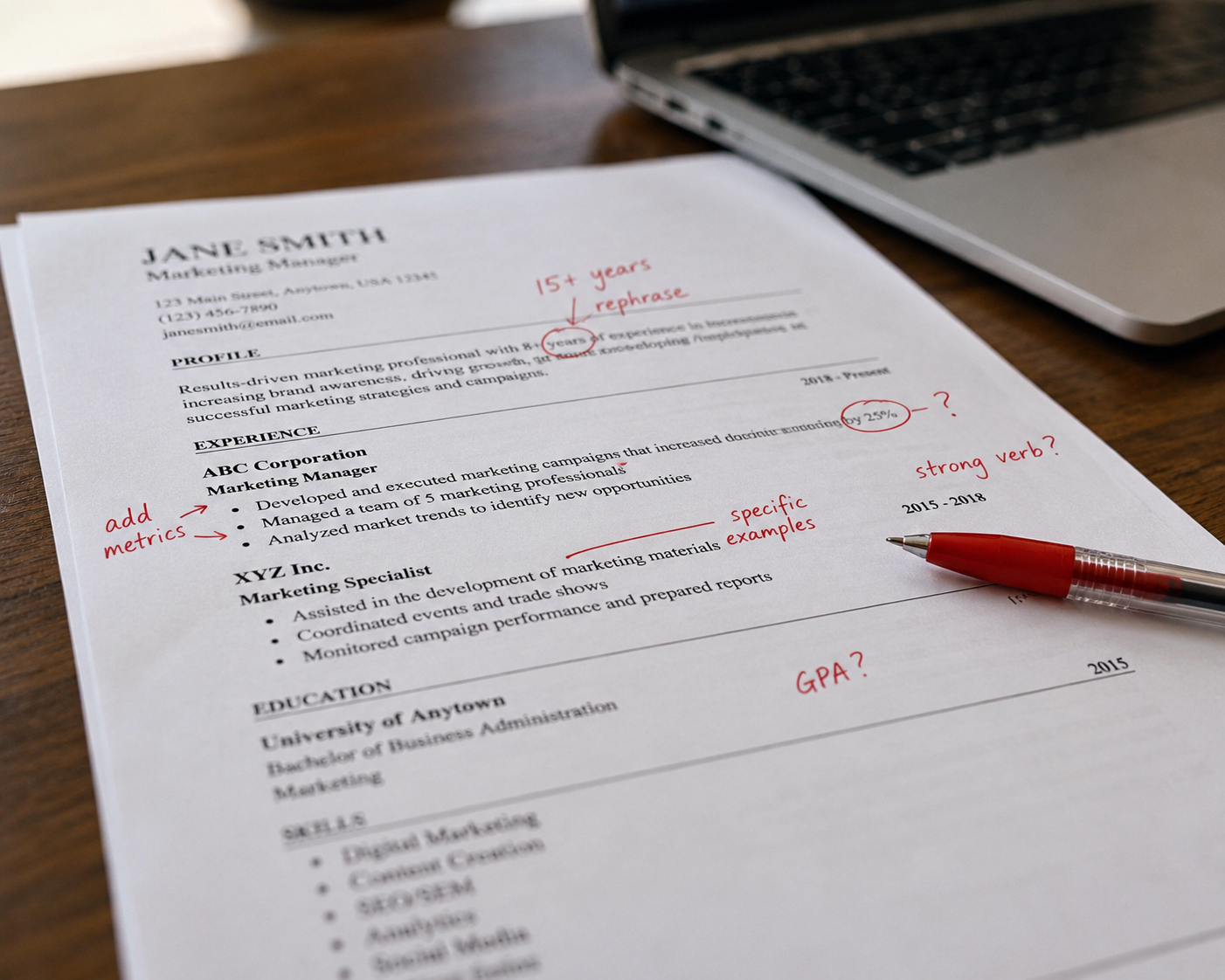
Sending the raw AI draft. Recruiters increasingly recognize the formulaic “five bolded key phrases” pattern that comes straight out of an unedited chatbot response. If your delivered resume still has that shape, you’ve charged money for something the client could have generated themselves in ninety seconds. Rewrite the structure, not just a few word choices.
Underpricing out of fear. New freelancers routinely charge $30–$50 because they’re afraid no one will pay more. That price attracts the clients most likely to demand endless revisions, because a low price signals low stakes to both of you. Charge Starter-tier pricing from day one, even for your very first client.
Skipping intake and using one template for everyone. A nurse’s resume and a sales director’s resume shouldn’t share a structure. Winging it without real intake questions produces a generic document that misses the achievements that actually matter for that specific role.
Using heavy-graphic, multi-column templates. Elaborate designs with icons, columns, and text boxes can scramble how parsing software reads contact details and job titles — the resume gets misread, not rejected, but the effect on the client is the same. Simple, single-column formatting with clear headings is what actually performs, no matter how plain it looks in a preview.
Not disclosing AI use where it’s required. Some platforms and corporate clients have explicit policies on AI-assisted work. Find out what applies to your client relationship and be upfront about your process — it protects you and it’s simply the honest way to run this business.
FAQ
The single thing worth remembering about an AI resume writing side hustle: the AI is the typing, not the value. Clients pay for the intake, the judgment, and the edit pass that turns a generic draft into something that sounds like them and actually gets read. Start with three practice resumes, price the Starter tier from day one, and let the referrals do the rest.
Keep building the business
Build Your High-Ticket Service Business — AI Prompt Pack
If you’re serious about turning this into a real side income, this prompt pack helps you structure pricing, positioning, and client communication for any AI-assisted service business — not just resume writing.
Get the Prompt Pack →A note on income figures: Pricing and income ranges in this article are illustrative estimates based on typical resume writing rates and general freelance-platform data, not guarantees. Actual earnings depend on your experience, market, consistency, and effort. This article is independent and unofficial; it is not affiliated with OpenAI, Anthropic, PARWCC, Upwork, or Enhancv.
Enjoyed this? Steal the 10 prompts I actually use.
The No-Hype AI Starter Kit — copy-paste prompts, a model cheat-sheet, and a 7-day plan. Drop your email and it's yours instantly.
No spam. Unsubscribe anytime.