


Every other post you’ve read this year promised that AI agents will run your whole business while you sleep. Then you tried one, it broke on day two, and you quietly closed the tab. So here’s the honest version: what can AI agents do for a small business right now — not in a keynote demo, but in a real shop with five people and no IT department. I spent a month running one to find out, and the answer is narrower, more boring, and more useful than the hype suggests.
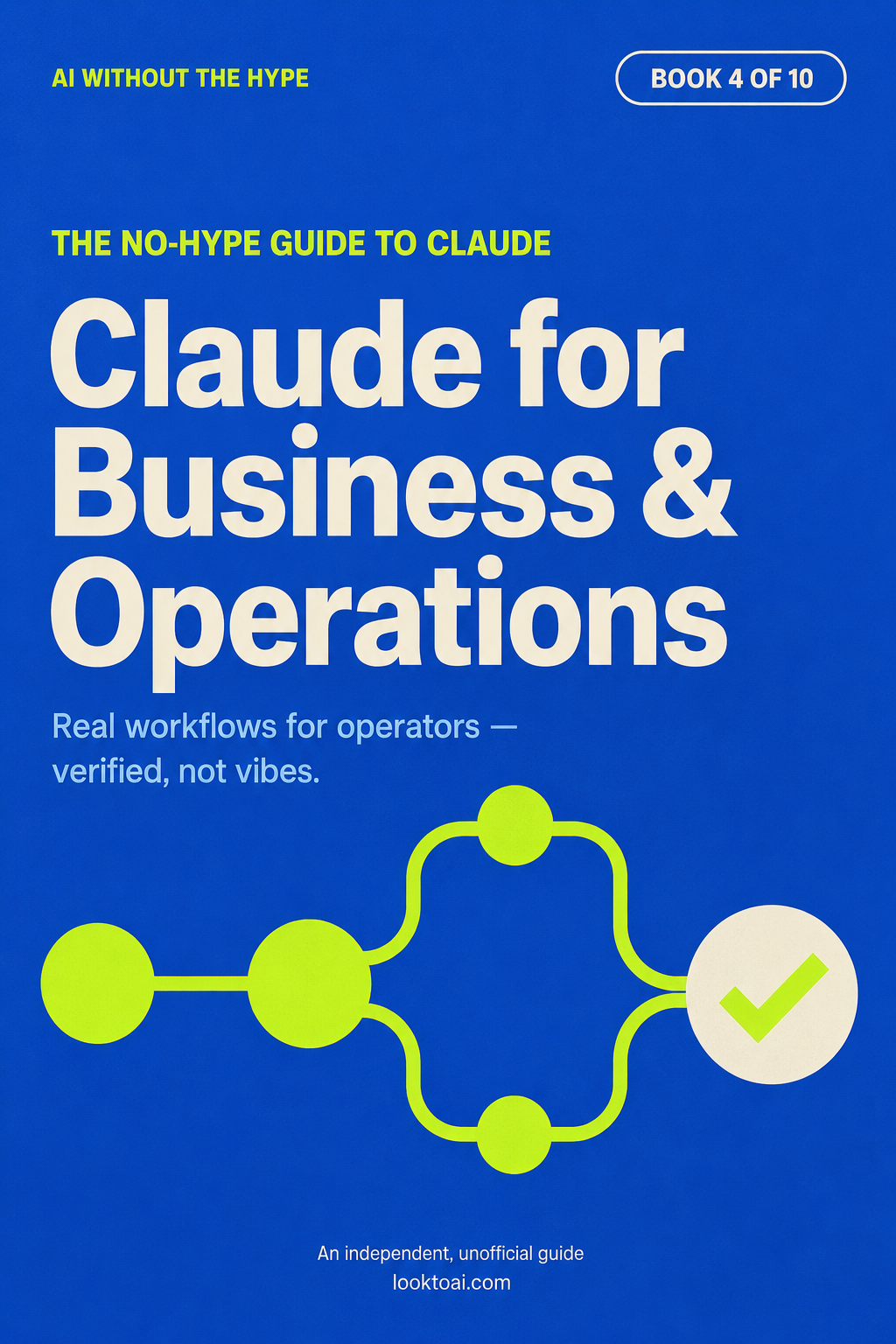
The No-Hype Guide to Claude — complete
- 10 books · 693 pages · every book stands alone
- 450+ prompts, each one run before it was printed
- $47 for the full set — under $5 a book
An AI agent can watch for a trigger (a new lead, an overdue invoice, an incoming email), decide what to do within rules you set, and then take action across your tools — without you pressing a button each time. For a small business in 2026, the genuinely working uses are narrow: qualifying and replying to leads, triaging support tickets, sorting email, updating your CRM, and chasing follow-ups. It won’t replace a person. It removes the repetitive admin around them.
Key Takeaways
- An AI agent is different from a chatbot: a chatbot answers when asked, while an agent watches for a trigger, decides, and acts across your systems on its own.
- The agents that actually work in 2026 have one narrow job with clear boundaries — the “do everything” generalist agents are where small businesses waste money.
- The highest-ROI starting point is lead handling, because responding within minutes instead of hours can multiply your qualification rate many times over.
- An agent that can’t connect to your existing tools is just a chat window; the whole value is end-to-end action — updating records, sending messages, triggering steps.
- Fully autonomous customer service still fails on complex or emotional issues, so every working setup keeps an easy handoff to a human.
- You can start for less than the cost of a streaming subscription using no-code tools, but only after you pick one painful, repetitive process to automate first.
What Is an AI Agent? (And How It’s Different From a Chatbot)
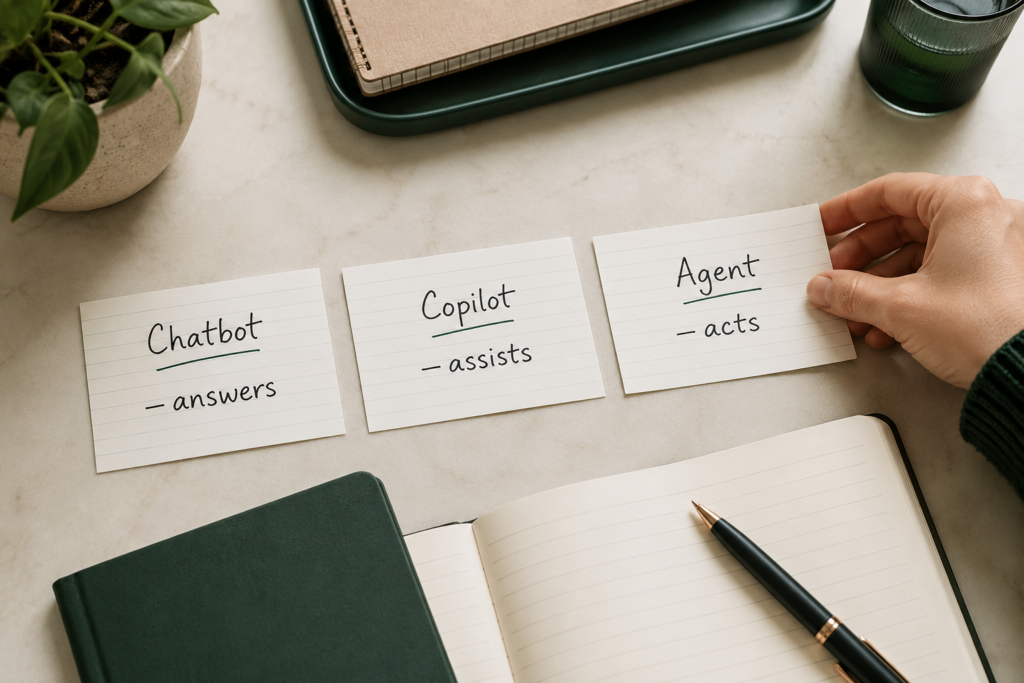
The first thing to get straight is what the word “agent” actually means, because the marketing has blurred it into meaninglessness. An AI agent is a piece of software that watches for something to happen, decides what to do about it within rules you’ve set, and then carries out the steps — across different apps — without needing you to approve each one.
This article is one chapter. The craft is ten books.
693 pages · 450+ tested prompts · instant download · $47
A concrete example beats a definition. Imagine someone fills out the contact form on your site. A chatbot might answer their question on the page. An agent does the rest: it checks whether the lead fits your ideal customer profile, pulls in background details, drafts a personalized reply, sends it, logs the contact in your CRM, and creates a follow-up task for three days later — all unprompted. That chain of actions is the thing that makes it an agent.
This matters because of one hard rule that separates working agents from expensive disappointments. An agent that can’t reach your actual tools is just a chat interface with extra steps. The value is in the doing — updating records, sending the email, triggering the next process. If it can’t take action inside the systems you already run, the work stays manual no matter how clever the conversation sounds.
What Can AI Agents Do for a Small Business Right Now?

The uses that deliver real returns in 2026 share three traits: the task is high-volume, it follows predictable rules, and it relies on structured data. That’s the sweet spot, and it’s deliberately unglamorous. Here are the jobs agents do well for small teams today.
Lead handling and qualification. The strongest starting point. An agent catches a new inquiry, scores it against your criteria, sends a fast personalized response, and books or routes it. Speed is the whole game here — one analysis found that replying to an inbound lead within five minutes makes it more than twenty times likelier to qualify than waiting half an hour. No human team answers every lead in five minutes. An agent does.
Customer support triage. Agents handle the routine top layer of support — order status, hours, pricing, simple troubleshooting — and hand the hard or emotional cases to a person with full context attached. The model that works is automation for the routine, seamless handoff for the complex. Not full replacement.
Email and inbox sorting. An agent reads incoming mail, classifies it by type and urgency, drafts suggested replies for routine questions, and turns action items into tasks. For an owner who loses a morning a week to inbox triage, this is quiet, reliable time back.
Admin and reconciliation. Matching invoices to purchase orders, flagging overdue payments, updating records across tools. Repetitive, rule-based, and exactly the work where human error creeps in — so it’s well suited to delegation.
Research and reporting. Agents can monitor competitors, gather market signals, and compile a recurring summary so you’re not reading reports for two hours every Monday.
| Use case | What the agent does | Tool examples | Realistic value |
|---|---|---|---|
| Lead handling | Scores, replies, books, logs | Zapier, Lindy, Make | Highest — speed wins deals |
| Support triage | Answers routine, escalates hard | Botpress, Lindy | High, with human handoff |
| Email sorting | Classifies, drafts, creates tasks | Zapier + ChatGPT | Hours back per week |
| Admin / reconciliation | Matches, flags, updates | Make, n8n | Fewer errors, less drudgery |
| Research / reporting | Monitors, summarizes, alerts | Gumloop, CrewAI | Saves recurring research time |
What I Found After Running an AI Agent for a Month

What worked surprised me. Response time dropped from “whenever he checked his phone” — often hours — to under two minutes, around the clock. Follow-ups, which he’d been forgetting entirely, now happened every time. Over the month it gave him back roughly five hours a week and, by his estimate, recovered two jobs that would have gone cold. That’s not a productivity-theater number. That’s rent.

"Every prompt was run before it was printed. If a claim couldn't be tested, it didn't make the book." The No-Hype Guide to Claude — all 10 books →
What broke is just as important. On day eleven, an app updated its connection and the workflow silently failed for half a day before either of us noticed — a reminder that agents need monitoring, not blind trust. The scoring mis-rated one lead as cold that turned out valuable, because the criteria I’d written were too strict. And a couple of the auto-drafted replies were a touch too formal for his easygoing brand, so we added a voice sample to fix the tone. None of these were dealbreakers. All of them needed a human paying attention.
The verdict after thirty days: an AI agent did real work, saved real time, and made real money back — but only because it had one narrow job, clear rules, and a person checking on it. It was a sharp tool, not an autonomous employee. Anyone selling you the second thing is selling you the day-two tab-close.
The numbers, for context: the whole thing took about three hours to build and cost under $30 a month to run. Against roughly five hours saved every week and two recovered jobs in the first month, the math wasn’t close. That lopsided return is the real reason small businesses are adopting agents — not because the technology is magic, but because a narrow, well-built one is cheap enough that even a modest time saving pays for it several times over. The trap isn’t the cost. It’s spending those three setup hours on the wrong process.
What AI Agents Still Can’t Do for a Small Business

For all that works, there’s a list of things agents still fail at in 2026, and the hype is loudest exactly where the limits are real. Knowing these saves you the wasted month.
They can’t be a generalist that replaces several roles. The single biggest money-waster is the agent that promises to do sales, support, marketing, and ops at once. Without a narrow, well-bounded job, these produce inconsistent results, miss context, and create more cleanup work than they save. Every reliable deployment is narrow on purpose.
They can’t run customer service fully on their own. Despite the pitch, autonomous support without human escalation still falls apart on complex or emotional issues. Customers detect robotic interaction, and hard problems need judgment the agent doesn’t have. The working pattern is the agent handling routine volume with a fast, visible path to a real person.
They can’t replace your relationships or judgment. Trust is human currency. Agents remove administrative friction so your people can spend their time on the conversations and decisions that actually differentiate a small business. The narrative of mass small-business job elimination isn’t borne out by how agents are actually being used — they’re augmenting staff, not deleting them.
From the series: everything in this article — and the nine books around it — lives in The Complete No-Hype Guide to Claude. 10 books, 693 pages, 450+ tested prompts, $47. See the library →
They can’t fix a broken process or messy data. An agent automates whatever it’s pointed at. Point it at a chaotic, undefined process and you get chaos at speed. The foundation — clean data, a clear workflow — has to exist before automation helps.
How to Set Up Your First AI Agent (Without Wasting a Month)
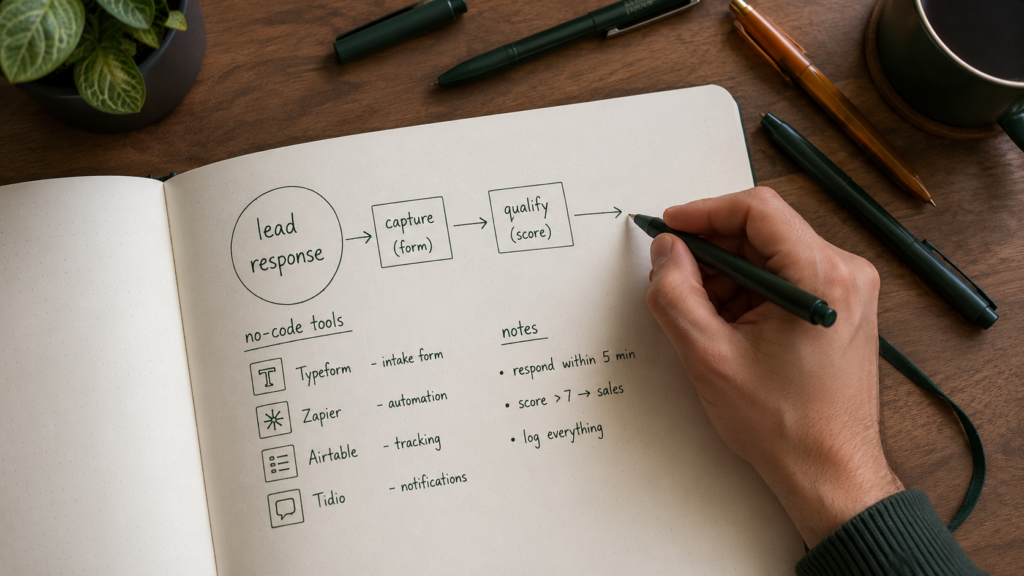
Getting value from agents is less about the tool and more about the discipline of starting small, which is the opposite of how most people approach it. The companies that ended up with expensive messes deployed a dozen agents at once and tried to replace departments overnight. The ones that won started with a single problem.
Pick one painful process first. Audit your week and name the single most repetitive, rule-based, high-volume task where speed or human error is the bottleneck. For most small businesses that’s lead response or inbox triage. Just one. Resist the urge to automate everything.
Define success before you build. Decide upfront what winning looks like — response time, hours saved, error rate, leads recovered. Without a metric, you can’t tell whether the agent earns its keep, and you’ll keep it running on vibes.
Choose a no-code tool that connects to your stack. You don’t need engineers. Zapier is the most approachable for non-technical owners and free for up to 100 tasks a month, with paid plans around $30/month once you need multi-step workflows. n8n is the more flexible, self-hostable option if you want control and lower long-run costs. Make and Lindy sit in between. The deciding factor isn’t features — it’s whether the tool can actually reach the apps you already use.Build one agent, one workflow, one integration. Keep the first build deliberately simple. Get it running in production, watch it for a week, and fix the edge cases. Many small businesses run real agents for less than a streaming subscription, because AI model costs have fallen by over 90% since early 2024.
Measure, then expand. Once your first agent proves its number, build the second for the next-highest-value task — and only then consider connecting agents to each other. Steady beats ambitious every single time.
Common Mistakes Small Businesses Make With AI Agents

Even owners who start with good intentions trip on the same four things, and each one quietly kills the ROI.
Starting with the technology instead of the problem. People ask “how do we use AI agents?” instead of “what’s the most expensive, repetitive thing we do?” The first question leads to a tool in search of a job. The second leads to an agent that pays for itself. Always start from the bottleneck, never from the buzzword.
Deploying with no human oversight. Treating an agent as set-and-forget is how you discover, two weeks later, that it’s been silently failing or sending off-key replies the whole time. Agents need monitoring and an owner. Check the logs, sample the outputs, and keep a person responsible for it.
Removing the escape hatch. In a rush to automate support, businesses bury the path to a human — no visible phone number, no easy “talk to a person” option. That frustrates exactly the customers with the highest-value problems. Always leave a fast, obvious way to reach a real person.
Writing the rules too loosely or too tightly. My own test showed both failure modes: criteria too strict miscategorized a good lead, and replies left too open came out off-brand. Agents do exactly what you tell them. Spend real time on the rules and the voice, test on real cases, and tighten based on what actually happens.
Frequently Asked Questions
What can AI agents do for a small business with no technical team? Plenty, using no-code tools. With a platform like Zapier or Lindy connected to ChatGPT, a non-technical owner can build an agent that handles leads, sorts email, triages support, or updates the CRM — no coding required. The work is in defining the process and the rules clearly, not in programming. Start with one repetitive task and a free or low-cost plan.
How much does an AI agent cost for a small business? Less than most people expect. No-code platforms like Zapier start free for light use and run around $30 a month for real multi-step workflows; support-focused tools have similar tiers. Because AI model costs have dropped over 90% since early 2024, many small businesses run a working agent for less than a streaming subscription. The bigger cost is your time setting it up well.
What’s the difference between an AI agent and a chatbot? A chatbot answers questions when you ask — it’s a conversation that ends when you stop typing. An AI agent watches for a trigger, decides what to do within your rules, and takes action across your tools without being asked each time. The chatbot talks; the agent does. That ability to act inside your systems is the whole distinction.

Will AI agents replace my employees? No, and that’s the wrong way to think about them. In 2026, agents are automating repetitive admin — lead logging, follow-ups, routine replies — so your people can focus on relationships and judgment, which agents can’t handle. Real-world adoption shows augmentation, not mass replacement. The owners getting value treat agents as a way to grow without adding headcount, not as digital staff.
What’s the best first AI agent to build for a small business? A lead-handling agent, in most cases. Responding to inquiries within minutes instead of hours can multiply your qualification rate many times over, so it’s where automation pays back fastest. It’s also a contained, rule-based task that’s safe to start with. Build it to qualify, reply, log, and follow up — then measure the leads it recovers before automating anything else.
Are AI agents reliable enough to trust unsupervised? Not fully, yet. Agents handle routine, well-defined work reliably, but they break when an app updates, when rules are too loose, or when a task needs judgment. Every working setup keeps a human checking outputs and a path to escalate. Treat an agent as a sharp tool that needs monitoring, not an autonomous employee you can ignore for a month.
What to Do With This Next
Strip away the keynote promises and the real answer to what can AI agents do for a small business is simple: they take one narrow, repetitive job off your plate and do it faster and more consistently than you can, as long as you give them clear rules and keep an eye on them. Pick your single most painful process this week, build one agent for it with a tool that connects to your stack, and measure what it saves — then, and only then, build the second.
Enjoyed this? Steal the 10 prompts I actually use.
The No-Hype AI Starter Kit — copy-paste prompts, a model cheat-sheet, and a 7-day plan. Drop your email and it's yours instantly.
No spam. Unsubscribe anytime.